What is an HRCT Chest Scan?
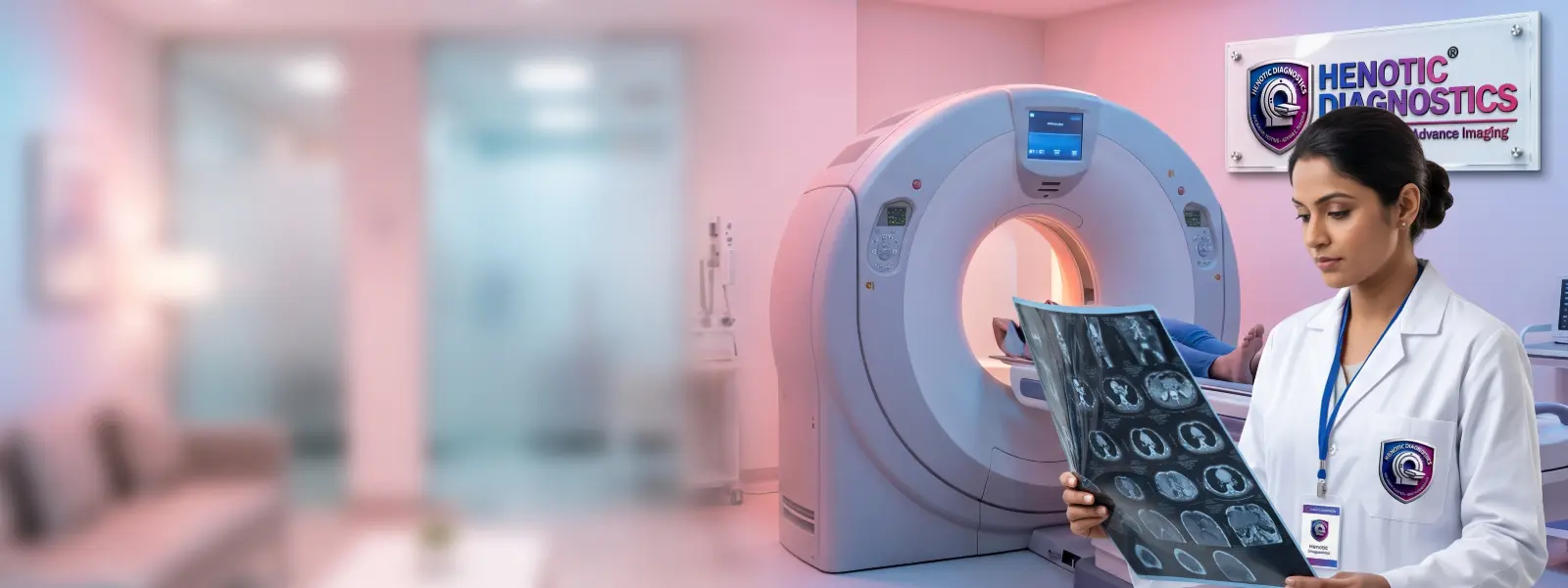
Specifically, a High-Resolution Computed Tomography (HRCT) Chest scan evaluates your lung parenchyma, airways, and interstitial tissue in exceptional detail. Furthermore, our advanced scanners capture thin-slice pictures to detect interstitial lung diseases, chronic bronchitis, bronchiectasis, and pulmonary infections.
Therefore, doctors consider it a vital diagnostic tool for persistent cough, breathing difficulties, and lung parenchymal disorders. For more detailed clinical information, you can read the RadiologyInfo guide on chest CT imaging. Similarly, if you only need vascular blood vessel evaluation instead, you might prefer a CT angiography scan.
Before Your HRCT Chest Scan, Please Bring:
In order to ensure a smooth appointment, please review the required documents and preparation steps listed below.
- Doctor’s prescription: Valid referral from a registered medical practitioner.
- Previous reports: Past chest X-ray, HRCT, or pulmonary function test reports for clinical comparison.
- Blood test reports: Recent Serum Creatinine/eGFR report (done within 30 days) if contrast is planned. You can book this routine blood test with us or learn more from the Mayo Clinic guidelines.
- Medications & History: List of current medications and relevant medical history (allergies, respiratory conditions).
- Insurance documents: If applicable, bring your insurance ID card and photo ID for cashless processing.
Is Contrast HRCT Chest Scan Safe?
Meanwhile, standard HRCT chest scans are performed plain without contrast for optimal lung parenchymal viewing, though intravenous contrast may be used if pulmonary embolism or mediastinal masses are suspected. Before contrast administration, our team reviews relevant medical history and kidney function information when clinically appropriate. Patients should inform the imaging team about previous contrast reactions, kidney disease, pregnancy, or other relevant medical conditions.
HRCT Chest Scan Radiation Safety & Quality Standards
Furthermore, CT imaging involves ionizing radiation. Our facility follows applicable radiation safety requirements and established protocols designed to minimize unnecessary radiation exposure while maintaining diagnostic image quality.
Consequently, we maintain rigorous NABH, NABL, and AERB compliance standards to guarantee maximum safety for every patient visiting our center.