Safe & Complete DVT Doppler Scan for Vascular Health
A DVT Doppler ultrasound offers a safe, painless, and radiation-free way to examine blood flow through your veins, ensuring proper circulation back to the heart. At Henotic Diagnostics, Kharghar, our expert radiologists combine high-frequency sound waves with Doppler technology to evaluate vascular health in your arms, legs, neck, or abdomen. Consequently, this advanced scan helps physicians identify blood clots, damaged vein valves, Deep Vein Thrombosis (DVT), and related circulatory risks. Furthermore, real-time ultrasound images enable early detection of vascular blockages. As a result, your medical team can quickly design an evidence-based treatment plan. For instance, to learn more about safety guidelines, visit the American Institute of Ultrasound in Medicine.
What is a DVT Doppler Ultrasound?
A DVT Doppler ultrasound measures the speed and direction of blood flow through your veins. Essentially, unlike traditional X-rays or CT scans, this test utilizes high-frequency sound waves and color flow mapping. Specifically, it eliminates the need for ionizing radiation or contrast dyes. Therefore, physicians view it as a completely safe imaging option for patients of all ages. Additionally, this non-invasive scan delivers a highly convenient method for diagnosing circulatory issues and ruling out deep vein blood clots.
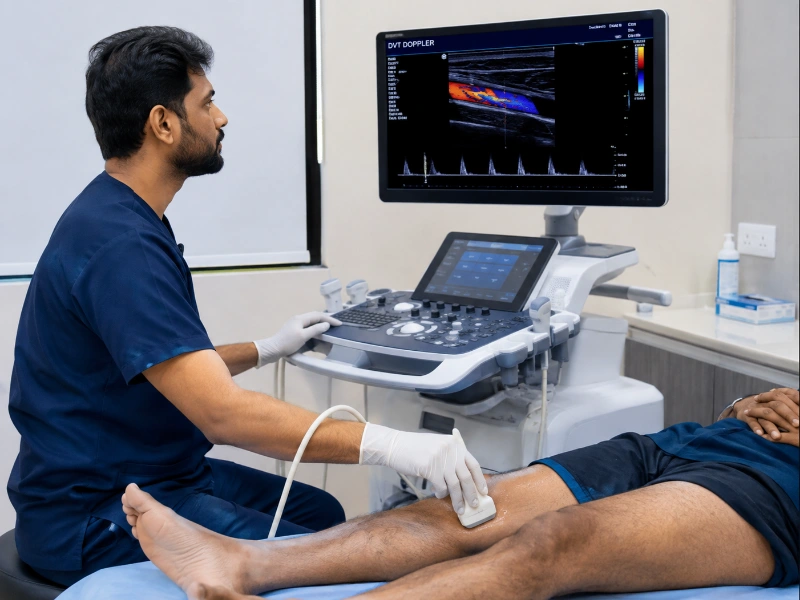
What Does a DVT Doppler Check?
Overall, the scan provides a comprehensive view of various venous systems based on your specific symptoms, focusing heavily on clot detection:
- Lower Extremity Veins: Evaluates veins in the legs, thighs, knees, and calves to definitively detect DVT, varicose veins, or chronic venous insufficiency.
- Upper Extremity Veins: Assesses veins in the arms and shoulders to uncover clots stemming from trauma, catheters, or thoracic outlet syndrome.
- Neck Veins: Examines jugular veins to verify proper blood drainage from the brain.
- Abdominal & Pelvic Veins: Inspects the inferior vena cava and iliac veins to rule out deep pelvic clots or blockages.
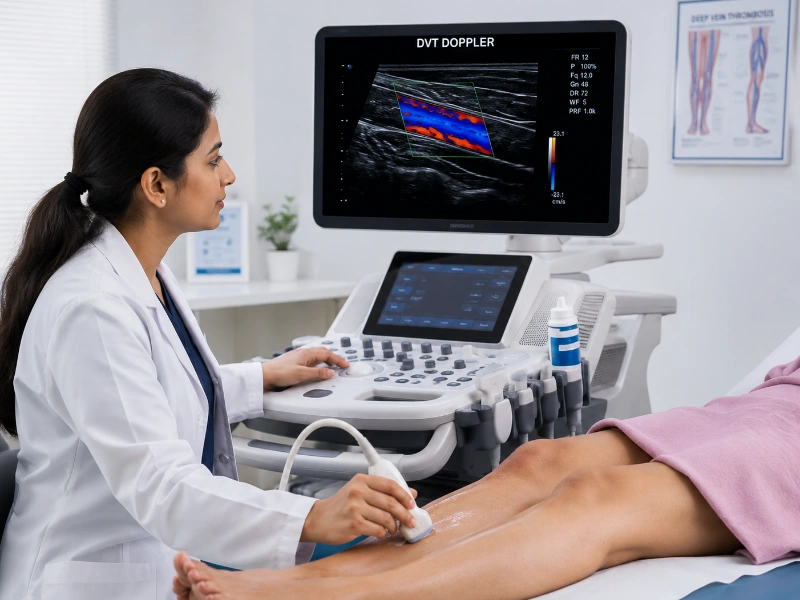
Who Should Get a DVT Doppler Ultrasound?
Physicians routinely order this scan to investigate diverse vascular symptoms indicating potential thrombosis. For instance, doctors advise immediate testing for patients presenting with sudden leg swelling, warmth, or calf redness. Moreover, high-risk individuals—such as expectant mothers, bedridden patients, frequent travelers, and post-surgery patients—benefit immensely from this diagnostic check. In addition, clinicians rely on this scan to evaluate varicose veins and map blood vessels before surgical procedures.
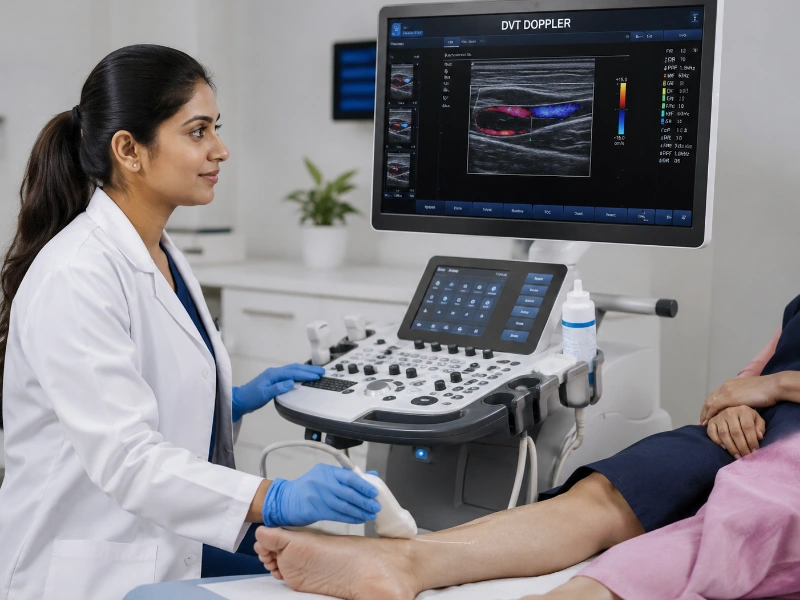
Indications for a DVT Doppler Scan
Medical professionals advise this examination to monitor and diagnose various clotting conditions. Specifically, doctors recommend it for patients suffering from unexplained limb swelling, heavy legs, or bulging veins. Furthermore, it serves as a critical follow-up for individuals with a history of DVT or pulmonary embolism. As a result, healthcare providers can accurately track the effectiveness of blood-thinning medications.
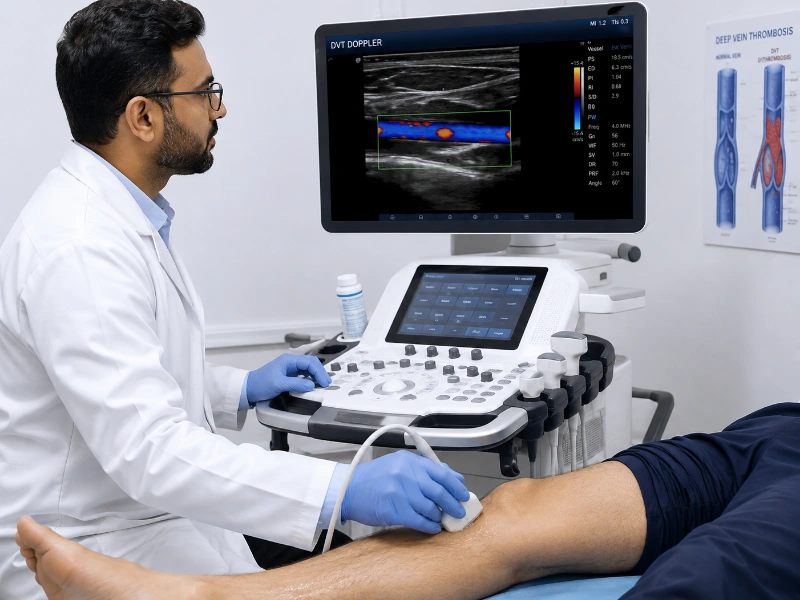
Why Physicians Recommend DVT Doppler Ultrasound
Medical professionals prioritize this test because it delivers a rapid, accurate diagnosis of potentially life-threatening conditions like deep vein thrombosis. Above all, it supplies real-time anatomical and physiological data. In fact, this information helps clinicians verify whether vein valves function properly or if blood pools in your lower limbs. Therefore, it speeds up decision-making for your medical team, aligning with professional standards from the Radiological Society of North America.
When to Contact a Doctor Immediately
Ideally, you should seek urgent medical care if you notice sudden, painful swelling in an arm or leg alongside redness and warmth. In addition, if these symptoms accompany sudden shortness of breath or chest pain, you must obtain emergency help immediately. Indeed, a blood clot might have traveled to the lungs, causing a dangerous Pulmonary Embolism.
Common Symptoms That May Need a DVT Doppler Scan
Your doctor may advise this scan if you experience severe or lingering discomfort. For example, watch out for persistent leg swelling, aching limbs, brownish skin discoloration near the ankles, bulging varicose veins, or leg cramps that worsen while standing. Meanwhile, our team offers detailed structural evaluations through our Advanced Vascular Studies service.
Types of DVT Doppler Studies
For instance, our facility offers various specialized Doppler examinations tailored to your specific clinical needs:
- Lower Extremity DVT Doppler: Examines the deep veins in the legs to detect dangerous blood clots.
- Venous Insufficiency Scan (Reflux Study): Evaluates vein valve function to pinpoint the root cause of varicose veins.
- Upper Extremity DVT Doppler: Assesses arm veins to check for clots caused by catheters or physical trauma.
- Abdominal DVT Doppler: Inspects deep pelvic veins and the inferior vena cava for structural issues and blockages.
Conditions Detectable via DVT Doppler Imaging
In fact, this diagnostic tool accurately identifies a wide array of venous disorders:
- Deep Vein Thrombosis (DVT): Dangerous blood clots forming in deep body veins.
- Chronic Venous Insufficiency (CVI): Malfunctioning valves that cause blood to pool in the lower legs.
- Varicose Veins & Spider Veins: Enlarged, twisted blood vessels visible under the skin.
- Superficial Thrombophlebitis: Inflammation and clotting in veins near the skin surface.
Benefits of the DVT Doppler Procedure
This procedure remains safe, radiation-free, non-invasive, and completely painless. In addition, it delivers high-resolution, real-time hemodynamic images. Consequently, patients receive an affordable diagnostic test that helps prevent severe complications like pulmonary embolisms.
Preparation and Procedure Steps
Generally, preparation depends on the target body area. Specifically, please fast for 6–8 hours if your doctor requests an abdominal scan, as bowel gas can obscure internal images. Alternatively, for arm or leg DVT Doppler scans, you do not need to fast at all. Furthermore, we recommend wearing loose, comfortable clothing, removing local jewelry, and bringing all previous medical reports to your visit.
|