Loading Diagnostics...
Connecting to our secure server
Connecting to our secure server

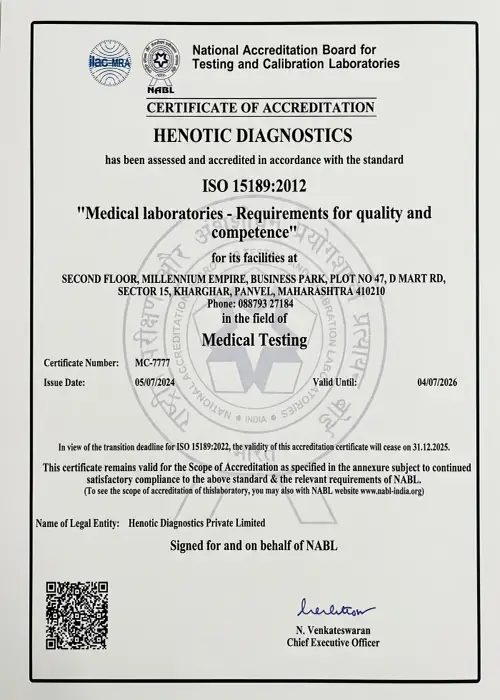
Browse our comprehensive library of diagnostic capabilities. We provide over 200 NABL accredited radiology scans and automated clinical pathology investigations.

In fact, a specialized Pelvic Scan For Fertility is a safe, non-invasive, and highly accurate diagnostic ultrasound examination. Specifically, it assesses uterine anatomy, measures endometrial thickness, determines ovarian reserve, and monitors egg follicle development throughout the menstrual cycle. At Henotic Diagnostics, Kharghar, expert radiologists perform this vital Follicular Study Ultrasound using state-of-the-art transvaginal sonography (TVS) technology. As a result, gynecologists and fertility consultants gain clear insights into ovarian health and ovulation timing, helping couples trying to conceive (TTC) naturally or preparing for assisted treatments like IUI and IVF. For instance, review reproductive imaging guidelines from the International Society of Ultrasound in Obstetrics and Gynecology.

In general, a Follicular Study Ultrasound (also known as a female Fertility Ultrasound Scan or Fertility Scan) is a targeted ultrasound assessment of the pelvic reproductive organs. Specifically, a transvaginal Follicular Study Ultrasound positions high-frequency sound probes close to pelvic structures. This allows sonographers to evaluate the precise structure of the uterus, count active resting follicles in the ovaries, measure blood circulation, and monitor dominant egg maturation. Because it uses acoustic sound waves rather than ionizing radiation, a Follicular Study Ultrasound is completely safe and can be comfortably repeated across menstrual cycles for accurate ovulation tracking. As a result, it provides a crucial diagnostic foundation for fertility care.

Overall, a comprehensive female Fertility Scan checks all critical anatomical parameters required for successful conception:

Generally, fertility specialists frequently recommend a Fertility Scan for women at various stages of their reproductive journey. For instance, you should consider getting scanned if you have been trying to conceive naturally for 6 to 12 months without success. In addition, patients experiencing irregular, missed, or unusually painful menstrual cycles benefit greatly. Moreover, a Fertility Scan is recommended for women diagnosed with PCOS, those taking ovulation induction medications like Letrozole or Clomiphene, or those preparing for artificial insemination (IUI) or In Vitro Fertilization (IVF).
In fact, gynecologists prescribe a Fertility Scan to gain detailed anatomical clarity before recommending medical or surgical fertility interventions. Specifically, it identifies whether ovulatory failure, poor uterine blood flow, structural growths, or thin lining rejections are impeding pregnancy. Consequently, it supports precise clinical guidance aligned with global infertility evaluation standards.
Above all, while home ovulation predictor kits (OPKs) test urine LH surges, they cannot physically confirm whether an egg sac matures and successfully ruptures. A Fertility Scan remains the clinical gold standard because it directly visualizes internal organ structures and vascularity. As a result, by measuring precise follicle growth and endometrial receptivity in real time, specialists can schedule trigger injections (hCG), timed intercourse, or insemination procedures for peak fertility success. For instance, these diagnostic protocols align with standards from the Royal College of Obstetricians and Gynaecologists.
Ideally, the timing for your Fertility Scan depends on your specific clinical goal:
Specifically, if you suffer from irregular periods, light spotting, delayed ovulation, severe menstrual cramps, or unexplained difficulty conceiving, your physician may advise a Follicular Study Ultrasound. In addition, pairing this evaluation with our Uterine Artery Doppler Scan helps evaluate blood supply receptivity.
In general, Henotic Diagnostics offers specialized Fertility Scan options tailored to your doctor’s referral:
In fact, an advanced Fertility Scan detects several hidden causes of reproductive challenges, including:
Above all, a Follicular Study Ultrasound at Henotic Diagnostics is quick, safe, non-invasive, and 100% radiation-free. In fact, transvaginal scans take only 10 to 15 minutes and produce immediate measurement sheets. Consequently, patients receive rapid diagnostic clarity, giving their doctors the exact data needed to optimize conception plans.
Generally, preparation depends on the chosen scan method. For a Transvaginal Fertility Scan (TVS), an empty bladder is required; you will pass urine immediately before entering the scan room. Wear comfortable two-piece clothing for convenience. For a transabdominal scan, drink 3 to 4 glasses of water 1 hour before to maintain a full bladder. Remember to bring your referral note and past medical reports.
In general, Henotic Diagnostics provides transparent and affordable pricing for every Pelvic Fertility Scan service:
| Pelvic Fertility Scan Service | Approximate Cost (₹) |
|---|---|
| Single Session Transvaginal Pelvic Fertility Scan (TVS) | ₹600 – ₹900 |
| Complete Serial Fertility Tracking Package (3 to 5 Visits per Cycle) | ₹2,000 – ₹3,000 |
| Combined Pelvic Fertility Scan & Uterine Artery Doppler Profile | ₹2,500 – ₹3,500 |
| Transabdominal Pelvic Fertility Scan | ₹700 – ₹1,000 |
In comparison, a standard pelvic ultrasound is a one-time structural exam that checks static organ size, general fibroids, or broad pelvic masses. In contrast, a specialized Pelvic Fertility Scan focuses specifically on reproductive dynamics—measuring active Antral Follicle Count (AFC), tracking daily follicle growth, observing endometrial pattern changes, and confirming exact egg release. For instance, explore the AIUM Pelvic Ultrasound Guidelines for technical scope details.
In fact, a Pelvic Scan For Fertility is completely safe, radiation-free, and virtually painless. Transvaginal sonography (TVS) uses a smooth, slender probe coated with sterile gel, causing minimal to no discomfort.
In general, for baseline ovarian reserve and Antral Follicle Count (AFC), scans start between Day 2 and Day 5 of your cycle. For ovulation tracking and endometrial lining evaluation, serial scans usually begin between Day 9 and Day 11.
Typically, a baseline assessment requires 1 scan. For serial ovulation monitoring, women usually require 3 to 5 short tracking visits spaced 1 to 2 days apart within a single cycle.
Specifically, at Henotic Diagnostics, verified scan reports and imaging sheets are provided immediately after your session to allow timely care decisions.
|
|
||||||
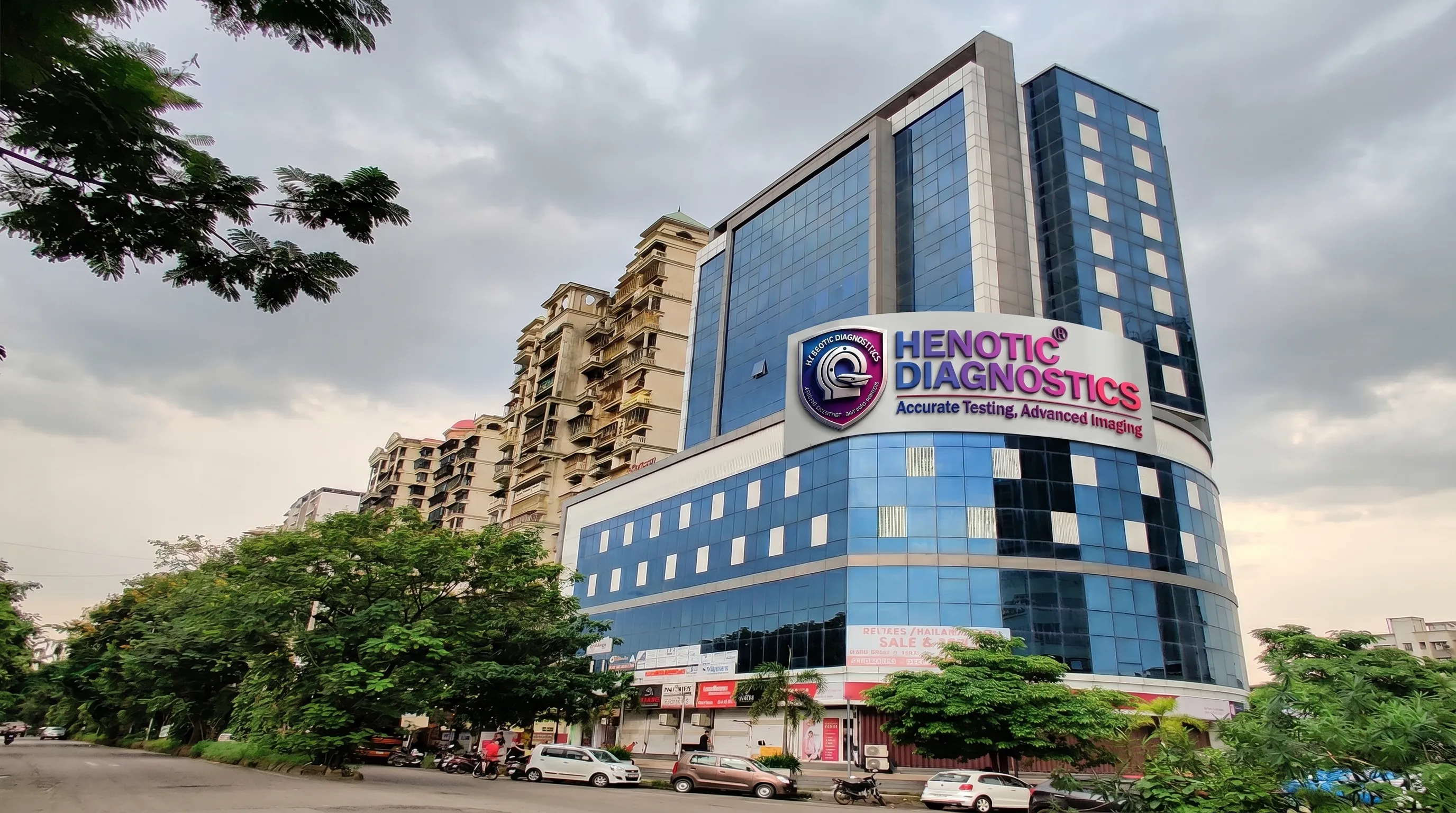
In fact, our imaging facility in Kharghar features high-definition Pelvic Fertility Scan ultrasound equipment and dedicated transvaginal probes. Additionally, we guarantee strict hygiene standards, complete female patient privacy, and prompt reporting.
Address: Second floor, Millennium Empire, Business Park, Plot No 47, D Mart Rd, Sector 15, Kharghar, Navi Mumbai, Panvel, Maharashtra 410210.
Phone: 088793 27184
⭐⭐⭐⭐⭐
“Extremely smooth experience for my Pelvic Fertility Scan tracking! Dr. Pratibha Patil explained the follicle growth pattern and uterine lining clearly during every visit. The clinic environment is very supportive for women undergoing fertility treatments.”
⭐⭐⭐⭐⭐
“Very fast fertility tracking appointments with zero wait time. Reports were handed over immediately after each scan visit to show my doctor. Highly recommended diagnostic center in Kharghar!”
In fact, Henotic Diagnostics provides advanced Pelvic Fertility Scan ultrasound imaging in Kharghar. Above all, our experienced diagnostic team prioritizes clinical accuracy, gentle patient care, and strict confidentiality.
If you need a comprehensive Pelvic Fertility Scan or tracking package, do not delay your evaluation schedule.
Call 088793 27184 to book your appointment slot.
Alternatively, explore our full range of diagnostic ultrasound services online.
|
Get priority booking through our secure portal.