
Loading Diagnostics...
Connecting to our secure server
Connecting to our secure server
12 people booked MRI Scan
in Kharghar today • Verified

Browse our comprehensive library of diagnostic capabilities. We provide over 200 NABL accredited radiology scans and automated clinical pathology investigations.
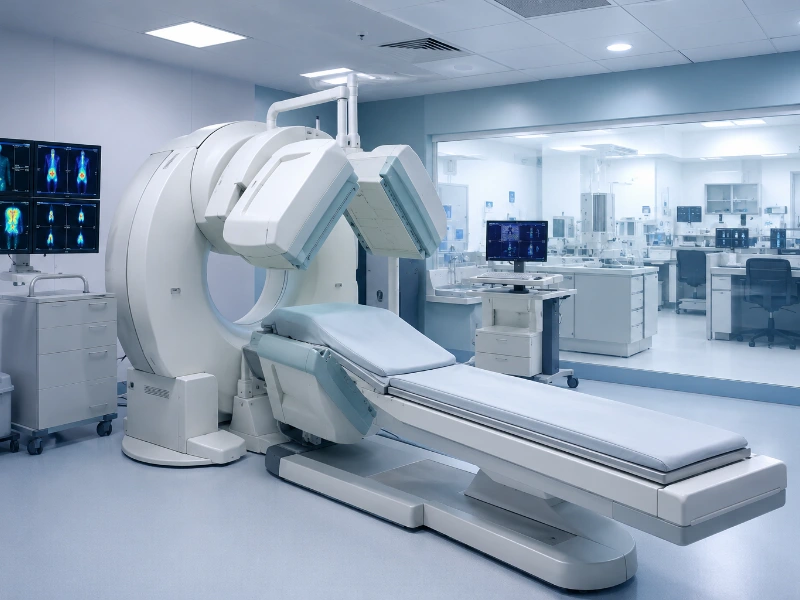
A Renal MAG3 Scan evaluates individual kidney blood supply, operational clearance, and structural urinary drainage patterns. Clinically known as a Technetium-99m Mercaptoacetyltriglycine (Tc-99m MAG3) renogram, this dynamic nuclear medicine procedure checks the live performance of your renal tract. Unlike general blood panels that only show combined waste indices, a dynamic scan tracks each organ independently. Therefore, our imaging facility utilizes advanced automated gamma cameras to capture fluid kinetics in real time. This high-precision evaluation measures your relative split differential function with outstanding diagnostic accuracy.
Furthermore, the MAG3 tracing agent features an exceptionally high clearing efficiency across renal structures. Consequently, it delivers remarkably sharp visual outlines of the drainage pathways, even in patients with reduced kidney output or swollen urinary tubes. This precision makes it the absolute gold-standard choice for evaluating pediatric blockages, checking kidney transplants, or investigating pelvic pooling. However, capturing these delicate excretion curves requires calibrated tracking arrays and expert interpretation. For this reason, our dedicated center employs standardized software. As a result, nephrologists and urologists can easily isolate mechanical blocks and plan effective care pathways.
A renal MAG3 scan is a dynamic functional imaging profile that relies on the rapid tubular clearance properties of technetium complexes. Therefore, precise laboratory calibration allows our nuclear medicine physicians to chart arterial blood flow, calculate individual organ clearing percentages, and evaluate urinary drainage paths for a complete renal assessment.
To ensure complete financial transparency for our patients, we provide clear, upfront cost structures across our advanced nuclear medicine imaging hubs. Below is the current price breakdown for renal MAG3 imaging variations and associated biochemical panel matchings at our centers:
| Diagnostic Scan / Panel Variation | Estimated Cost (INR) |
|---|---|
| Standard Renal MAG3 Scan (with Split Function) | ₹6,500 – ₹8,000 |
| Diuretic Renal MAG3 Scan (with Lasix Injection) | ₹7,500 – ₹9,000 |
| Comprehensive Renal MAG3 Evaluation Panel | ₹8,800 – ₹10,500 |
Note: Final pricing variations can occur based on specialized pharmaceutical requirements or specific clinical instructions provided by your referring consultant.
Physicians commonly recommend a dynamic MAG3 kidney scan when evaluating suspected blocks, tracking recurrent urinary infections, or verifying organ performance before and after transplant surgeries. Moreover, the analytical findings directly assist nephrologists, urologists, pediatric surgeons, and transplant teams in choosing the safest treatment paths. Our experienced clinical team ensures you receive highly accurate imaging and reports.
Immediately after the tracer injection, our cameras capture rapid, split-second frames of your lower back. This early window tracks the direct flow of blood through the renal arteries, helping your doctor spot narrow blood vessels or vascular issues early.
Over the next few minutes, the scanner measures how quickly your kidney tissues pull the MAG3 agent from your blood. Because your kidneys extract this compound rapidly, this step provides excellent image clarity to construct highly accurate individual functional curves.
The camera tracks the tracer as it gathers in the center of the kidneys and drains down through the ureters into the bladder. Watching this clearance step allows technicians to see exactly how smoothly fluid moves through your urinary tract.
If the tracer pools sluggishly in the kidney, a mild diuretic injection is introduced mid-scan. If the extra fluid flow flushes the tracer out instantly, it shows the pathway is clear but slow; if the tracer remains trapped, it confirms a physical block that may require surgical care.
An accurate dynamic MAG3 scan helps clinicians identify, track, and manage a wide variety of structural, functional, and vascular kidney disorders. You can find detailed clinical guidelines from the National Kidney Foundation standards.
If your dynamic kidney scan reveals filtering drops or clearance delays, your physician may suggest matching your imaging with other advanced diagnostic evaluations. For a detailed laboratory look at your blood waste levels and mineral markers, see our Kidney Function Test services or our comprehensive blood test services. For complete whole-blood counts and blood sugar tracking, check out our Complete Blood Count (CBC) test services or our targeted HbA1c test services. You can also monitor your liver enzymes with a Liver Function Test, track fat distributions with a Lipid Profile test, or see how structural neuroendocrine pathways are monitored using our specialized MRI Pituitary Brain services. If you need standard blood samples collected comfortably at home while you rest, you can book a certified mobile professional through our home blood collection services.
The entire imaging sequence is highly efficient, typically requiring less than an hour of continuous scanning to complete safely.
A DTPA scan clears through the kidneys primarily via passive glomerular filtration, making it excellent for measuring GFR. A MAG3 scan clears primarily through active tubular secretion. Because the kidneys extract the MAG3 tracer much faster, it provides much sharper images and more reliable clearance data in damaged kidneys, obstructed systems, or young children.
The scan itself is completely painless. You will only feel a standard mild pinch when the IV line is placed in your arm. The MAG3 tracer uses a very low, safe dose of diagnostic radiation that leaves your body naturally through your urine within 24 hours. It does not cause drowsiness or nausea, meaning you can drive home right after the test.
In young infants or children with swollen kidneys, the clear visual definition of the drainage system is vital. The high clearance rate of the MAG3 tracer creates distinct pictures of the ureters, showing exactly where a structural block sits without causing heavy background tissue blur.
Our nuclear medicine facility processes your dynamic flow charts and split relative function curves efficiently. As a result, a senior specialist reviews the clearance metrics, and a verified interpretation report is usually ready for your doctor within 24 hours.
Ultimately, a hidden urinary tract block or a silent drop in individual kidney function can cause long-term, irreversible tissue scarring if left unmanaged. High-precision MAG3 scintigraphy is the only definitive way to measure your live tubular clearance, remove the medical guesswork, and protect your long-term health safely.
Our medical center remains the premier choice for monitoring your health because we combine high-resolution gamma camera technology with advanced split differential function software. Furthermore, our clinical workflows eliminate tracking anomalies, our quality control protocols align with top pathology standards, and we ensure rapid delivery of your reports so you and your doctor stay fully informed. This steady focus on diagnostic accuracy makes our imaging facility a trusted partner in protecting your long-term renal, vascular, and metabolic wellness.
Get priority booking through our secure portal.