Browse our comprehensive library of diagnostic capabilities. We provide over 200 NABL accredited radiology scans and automated clinical pathology investigations.
First of all, Prenatal Genetic Testing is an essential prenatal service evaluating fetal chromosomal health and hereditary gene status early during pregnancy. Essentially, integrating non-invasive cell-free fetal DNA (cfDNA NIPT) sequencing from maternal blood with invasive diagnostic testing (amniocentesis karyotyping and chromosomal microarray CMA), Prenatal Genetic Testing detects Trisomy 21 (Down syndrome), Trisomy 18, Trisomy 13, and sub-microscopic deletions with 99.9% clinical accuracy. Consequently, expectant parents gain complete peace of mind.
Furthermore, book your Prenatal Genetic Testing at Henotic Diagnostics for authoritative diagnostic accuracy. In addition, our accredited prenatal genetics laboratory operates 24/7 with expert fetal medicine counseling and home sample collection facilities.
To begin with, Prenatal Genetic Testing encompasses a spectrum of advanced genomic evaluations performed during pregnancy to assess fetal chromosomal structure and DNA integrity. At the same time, experts at Henotic Diagnostics combine maternal blood cell-free DNA sequencing (NIPT) and diagnostic amniocentesis microarray testing to deliver high-resolution prenatal clarity.
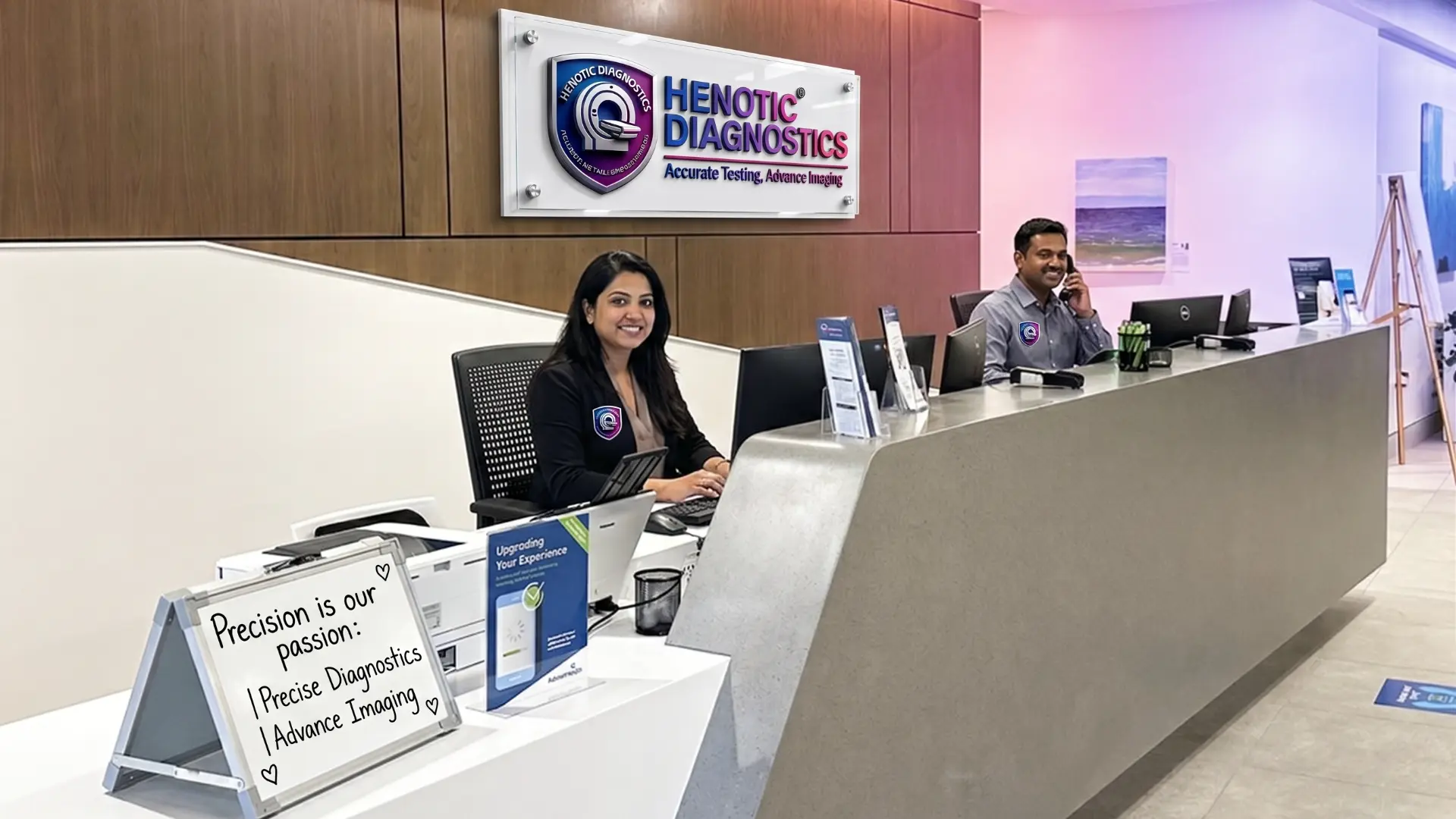
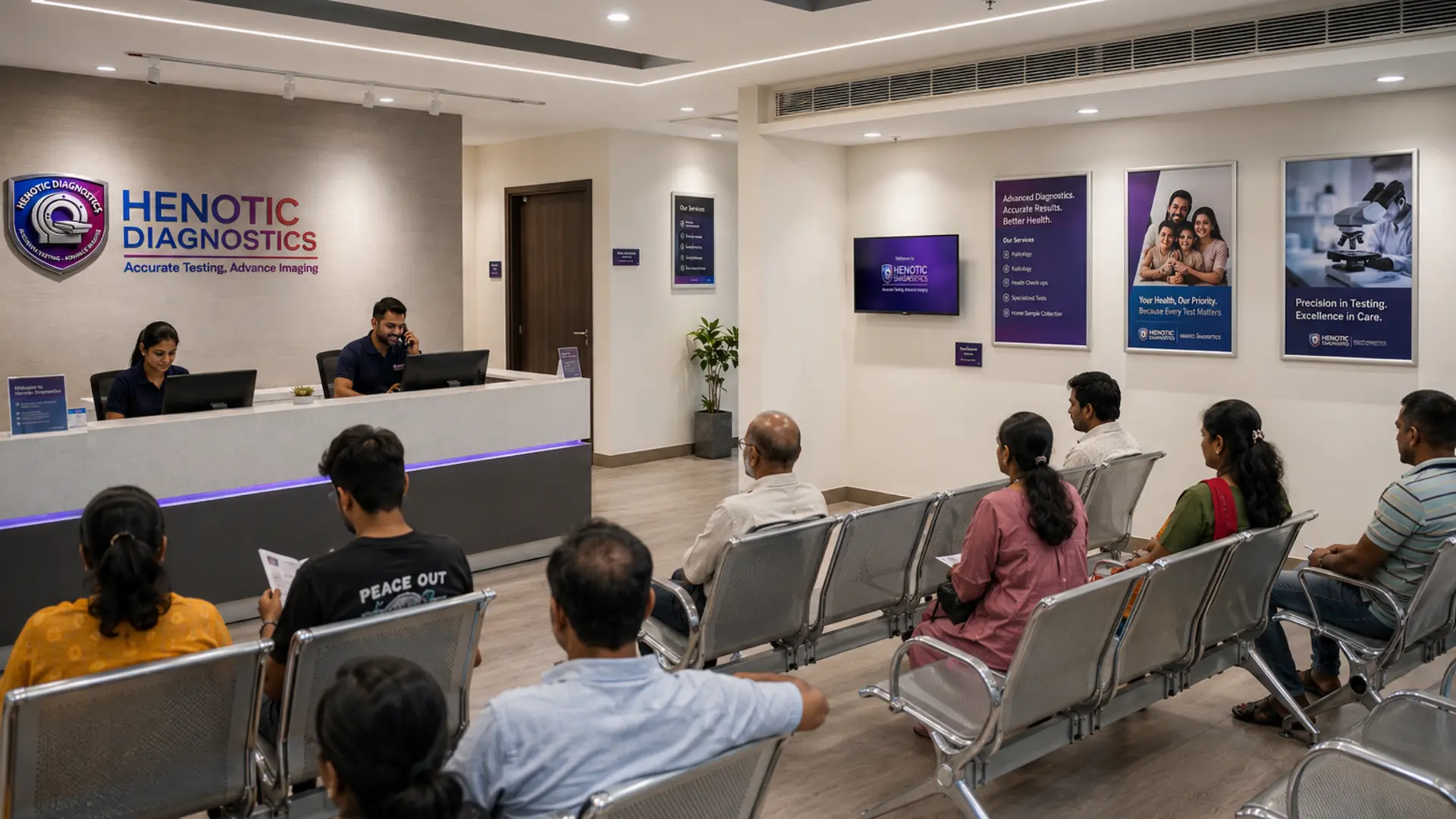
Furthermore, comfortable reception lounge providing supportive patient registration for prenatal blood draws
What Does Fetal Genetic Testing Evaluate?
Specifically, Prenatal Genetic Testing evaluates numerical trisomies (Trisomy 21 Down syndrome, Trisomy 18 Edwards syndrome, Trisomy 13 Patau syndrome), sex chromosome variations (Turner 45,X, Klinefelter 47,XXY), microdeletions (22q11.2 DiGeorge syndrome), and single-gene mutations. Consequently, obstetricians and perinatologists optimize prenatal management, delivery timing, and neonatal care. As a result, parents make informed healthcare decisions. In fact, to review prenatal testing facts, consult the NIH NHGRI Genetic Testing Fact Sheet.
Furthermore, DNA (cfDNA NIPT) sequencing providing fetal chromosomal health and hereditary gene status early during pregnancy.
What is Fetal Genetic Testing?
In general, placental trophoblast cells release short cell-free DNA fragments into maternal circulation during pregnancy. Essentially, Prenatal Genetic Testing isolates this circulating cfDNA from a 10ml maternal blood sample and performs deep Next-Generation Sequencing (NGS) to measure chromosomal copy numbers. Therefore, fetal trisomies are detected non-invasively as early as 10 weeks of gestation. Additionally, to read about clinical fetal genomics, examine the Nature Reviews Genetics journal.
Additionally, high-throughput NGS platforms sequence cell-free fetal DNA fragments to detect numerical aneuploidies
What Does Fetal Genetic Testing Check?
Overall, clinical Prenatal Genetic Testing evaluates major chromosomal and genetic disease categories:
Key Prenatal Conditions Evaluated
✓
Autosomal Trisomies (21, 18, 13): First, screens Down, Edwards, and Patau syndromes with >99% detection rates.
✓
Sex Chromosome Aneuploidies (SCA): Second, screens Turner syndrome (45,X), Klinefelter syndrome (47,XXY), Triple X, and XYY.
✓
Microdeletion & Duplication Syndromes: In addition, detects 22q11.2 DiGeorge, Cri-du-chat, and 1p36 deletion syndromes. Review the ClinVar NCBI variant database.
In addition, bioinformatic software plots fetal fraction percentages and chromosomal copy ratios for clinical reports
When Is Fetal Genetic Testing Recommended?
For example, ACOG guidelines recommend offering non-invasive Prenatal Genetic Testing to all expectant mothers regardless of maternal age. In particular, testing is strongly advised for mothers aged 35 or older, couples with abnormal first-trimester ultrasound markers (such as increased nuchal translucency NT), or parents with a prior child affected by chromosomal anomalies. In addition, to review ACOG clinical guidelines, examine the ACOG American College of Obstetricians & Gynecologists Guidelines.
Moreover, senior fetal medicine consultants interpret screening results to guide expectant parents through options
Clinical Value: Early Non-Invasive cfDNA Screening vs. Invasive Diagnostic Confirmation
Ideally, expectant mothers should initiate prenatal evaluation with non-invasive cfDNA NIPT because it achieves >99% detection for Down syndrome without invasive procedure risks. In contrast, invasive amniocentesis is reserved for confirming high-risk NIPT results or evaluating major ultrasound structural malformations. Indeed, to review global maternal health standards, consult the WHO Fetal Disease & Global Maternal Health Fact Sheet.
Fetal Genetic Testing Cost Guide
Prenatal Genetic Testing Panel
Approximate Cost (₹)
Core Non-Invasive NIPT (Trisomy 21, 18, 13 + Sex Chromosomes)
Comparison: Non-Invasive Screening (NIPT) vs. Diagnostic Amniocentesis
On one hand, Non-Invasive NIPT screens maternal blood with zero pregnancy risk starting at 10 weeks, whereas Diagnostic Amniocentesis samples amniotic fluid to provide 100% diagnostic confirmation of chromosomal rearrangements. Consequently, clinical guidelines recommend NIPT for primary screening and amniocentesis for diagnostic confirmation. In fact, review the PubMed Clinical Fetal Genetic Testing Review.
Feature
Non-Invasive NIPT (cfDNA)
Diagnostic Amniocentesis
Procedure Type
First, simple maternal blood draw.
However, ultrasound-guided needle sampling.
Miscarriage Risk
Second, 0% (Zero risk to fetus).
In contrast, minimal risk (<0.5%).
Earliest Gestation
In addition, from 10 weeks onward.
Meanwhile, from 15 to 20 weeks.
Clinical Classification
Finally, high-precision screening test.
Likewise, 100% definitive diagnostic test.
Frequently Asked Questions
What is Fetal Genetic Testing?▼
First, Prenatal Genetic Testing encompasses non-invasive maternal blood screening (NIPT) and diagnostic amniocentesis/CVS testing to evaluate fetal chromosomes and genes during pregnancy.
What conditions are detected in Fetal Genetic Testing?▼
In addition, the test evaluates Down syndrome (Trisomy 21), Edwards syndrome (Trisomy 18), Patau syndrome (Trisomy 13), Turner syndrome (45,X), Klinefelter syndrome (47,XXY), and 22q11.2 DiGeorge microdeletions.
At how many weeks can Fetal Genetic Testing be performed?▼
Generally, non-invasive cell-free DNA (NIPT) is performed from 10 weeks of gestation onward, CVS from 11-14 weeks, and Amniocentesis from 15-20 weeks.
Is non-invasive Fetal Genetic Testing safe for the baby?▼
Because non-invasive NIPT requires only a routine maternal blood draw, it poses zero miscarriage risk to the fetus.
How long until I receive diagnostic Fetal Genetic Testing results?▼
Fortunately, detailed clinical bioinformatic fetal genetic reports are delivered within 5 to 12 business days.
What is the cost of Fetal Genetic Testing?▼
Overall, high-precision Prenatal Genetic Testing ranges from ₹12,000 to ₹32,000 depending on panel scope (Core Trisomy NIPT, Expanded Microdeletion Panel, or Amniotic Microarray).
Quick Appointment Booking
Schedule your Fetal Genetic Testing with accredited fetal medicine specialists.
MBBS, MD (Perinatology) · 15+ Years Clinical Experience
Furthermore, your Fetal Genetic Testing reports are evaluated by accredited fetal medicine radiologists and genetic counselors. Consequently, detailed reports empower parents with clear clinical guidance.
Real feedback from expectant parents who completed Fetal Genetic Testing with us.
⭐⭐⭐⭐⭐
“At age 37, non-invasive Fetal Genetic Testing (NIPT) gave us low-risk reassurance for Down syndrome within 7 days. Furthermore, home blood collection was seamless!”
– Priyanka S.
Verified Patient Review
⭐⭐⭐⭐⭐
“Extremely thorough amniotic microarray report after an abnormal ultrasound marker. In addition, post-test counseling was incredibly reassuring.”
– Rahul G.
Verified Patient Review
⭐⭐⭐⭐⭐
“Premier NABL accredited laboratory for prenatal genetics. Henotic Diagnostics is our trusted referral center for NIPT and diagnostic amniocentesis.”
– Dr. Swati K.
Verified Obstetrician & Fetal Medicine Specialist Review
If you are pregnant, seeking non-invasive NIPT screening, or requiring diagnostic prenatal testing, do not delay. Call to schedule your sample collection.
Henotic Diagnostics
Second floor, Millennium Empire, Business Park, Plot No 47, D Mart Rd, Sector 15, Kharghar, Navi Mumbai, Panvel, Maharashtra 410210
You can book your Fetal Genetic Testing appointment at our Navi Mumbai center through multiple convenient channels: call us directly at 088793 27184, send a WhatsApp message for instant booking, or use the online booking form on our website. Walk-in appointments are also welcome based on slot availability. We recommend advance booking to ensure zero wait times.
Yes, Henotic Diagnostics Navi Mumbai is empanelled with all major insurance companies and TPAs (Third Party Administrators) including Star Health, ICICI Lombard, New India Assurance, HDFC Ergo, Max Bupa, Bajaj Allianz, and many more. We offer cashless processing for Fetal Genetic Testing where applicable. Please carry your insurance card and a valid ID for seamless processing.
At Henotic Diagnostics Navi Mumbai, most Fetal Genetic Testing reports are delivered within 2-6 hours for routine tests. Critical and urgent reports are expedited on a priority basis. All reports are delivered digitally via WhatsApp, email, and our secure online patient portal. Hard copies are also available at the center upon request. You will receive an SMS/WhatsApp notification the moment your report is ready.
Henotic Diagnostics Navi Mumbai operates 24 hours a day, 7 days a week, including Sundays and public holidays. This means you can schedule your Fetal Genetic Testing at a time that is most convenient for you — early morning, late evening, or even overnight for emergency requirements. Our radiology and pathology departments maintain round-the-clock availability.
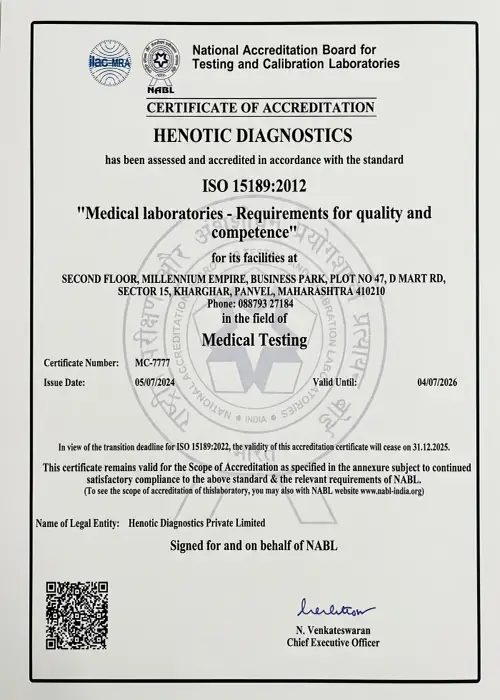
Yes, Henotic Diagnostics Navi Mumbai is fully accredited by NABL (National Accreditation Board for Testing and Calibration Laboratories) and ISO 9001:2015 certified. Our radiology equipment also complies with AERB (Atomic Energy Regulatory Board) safety standards. These accreditations ensure that every Fetal Genetic Testing performed at our facility meets the highest national and international quality benchmarks for accuracy, safety, and reliability.
The cost of Fetal Genetic Testing at Henotic Diagnostics Navi Mumbai starts from ₹1,000 for basic pregnancy scans and goes up to ₹2,500 for advanced scans like fetal echocardiography — all priced 40-50% lower than hospital rates. Our fetal medicine specialist ensures thorough evaluation at every scan. Contact us for exact pricing based on your gestational stage and clinical requirement.
The recommended pregnancy scan schedule is: (1) Dating/Viability Scan — 6-8 weeks (confirms pregnancy and heartbeat). (2) NT Scan — 11-14 weeks (screens for Down syndrome risk). (3) Anomaly Scan (Level 2) — 18-22 weeks (detailed structural evaluation of the baby). (4) Growth Scan — 28-32 weeks and 34-36 weeks (monitors fetal growth and amniotic fluid). (5) Fetal Doppler — as advised by doctor for high-risk pregnancies. (6) Fetal Echocardiography — 22-24 weeks (detailed heart evaluation). Your obstetrician will customize this schedule.
Yes, Fetal Genetic Testing is completely safe for both mother and baby. Obstetric ultrasound uses harmless sound waves (not radiation) and has been used safely in prenatal care for over 40 years worldwide. All our scans follow international safety guidelines (ALARA principle for ultrasound) and ISUOG (International Society of Ultrasound in Obstetrics and Gynecology) protocols. Scans are performed by an experienced fetal medicine specialist.
For early pregnancy scans (first trimester, dating scan, NT scan) — a moderately full bladder is recommended for better image quality. Drink 2-3 glasses of water about 30-45 minutes before your appointment. For second and third trimester scans (anomaly scan, growth scan) — no special preparation is required. Wear comfortable, two-piece clothing for easy access to the abdomen. Bring all previous scan reports and your prescription.
The anomaly scan (also called the Level 2 or TIFFA scan) is a detailed ultrasound performed between 18-22 weeks of pregnancy. It systematically evaluates: (1) Brain and skull structure. (2) Facial features (lips, palate). (3) Spine integrity. (4) Heart chambers and vessels. (5) Abdominal organs (stomach, kidneys, bladder). (6) Limbs, hands, and feet. (7) Placenta position and amniotic fluid volume. (8) Umbilical cord. At Henotic Diagnostics Navi Mumbai, this scan is performed by a certified fetal medicine specialist for maximum accuracy.
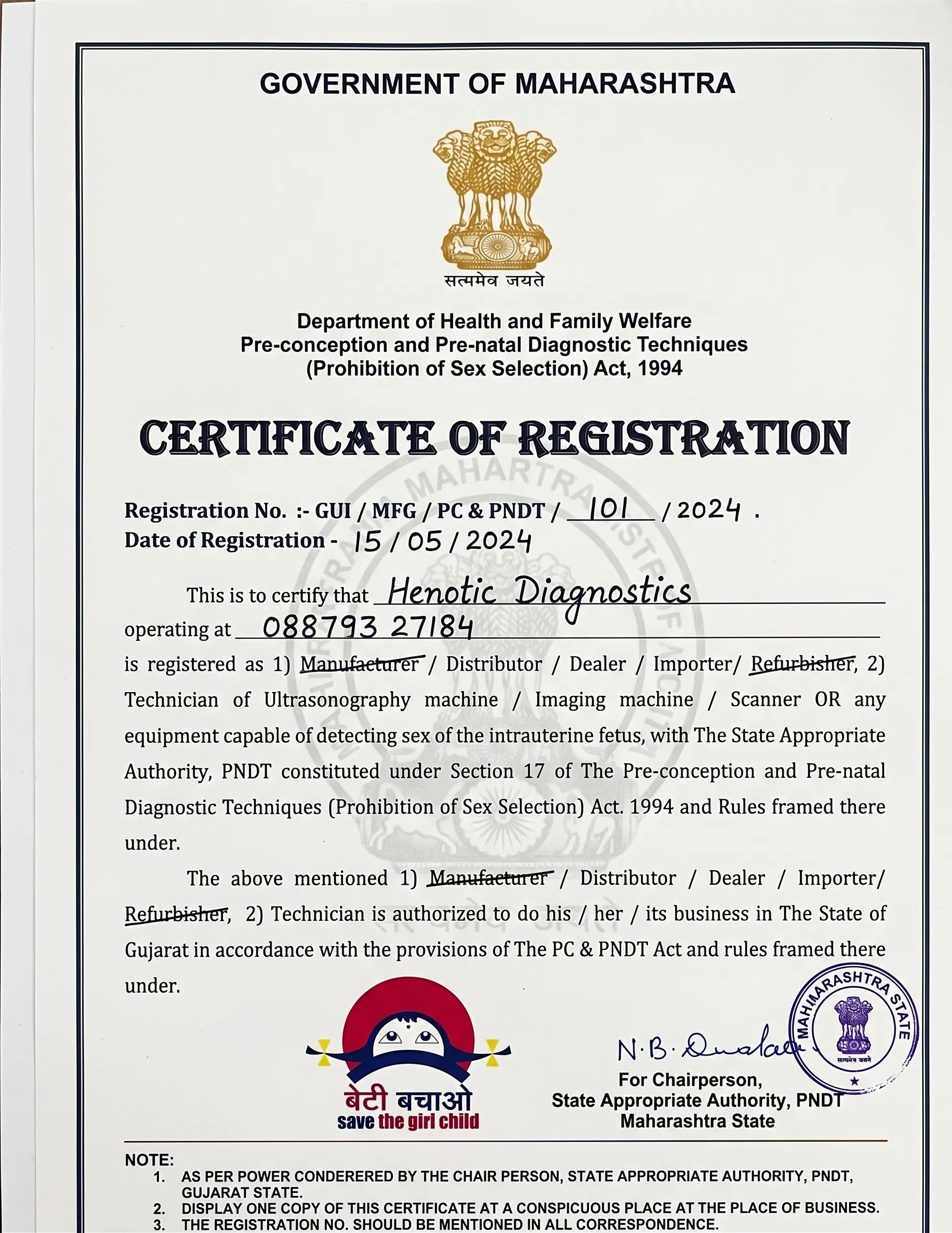
Absolutely. Henotic Diagnostics Navi Mumbai strictly complies with the Pre-Conception and Pre-Natal Diagnostic Techniques (PCPNDT) Act, 1994, and all its amendments. We are a registered and licensed ultrasound facility. Sex determination of the fetus is a punishable offense and is strictly prohibited at our center. Every prenatal ultrasound is performed by qualified, registered sonologists, and all records are maintained as per government regulations.