Loading Diagnostics...
Connecting to our secure server
Connecting to our secure server
Which diagnostic test should you choose? A comprehensive, doctor-reviewed comparison.
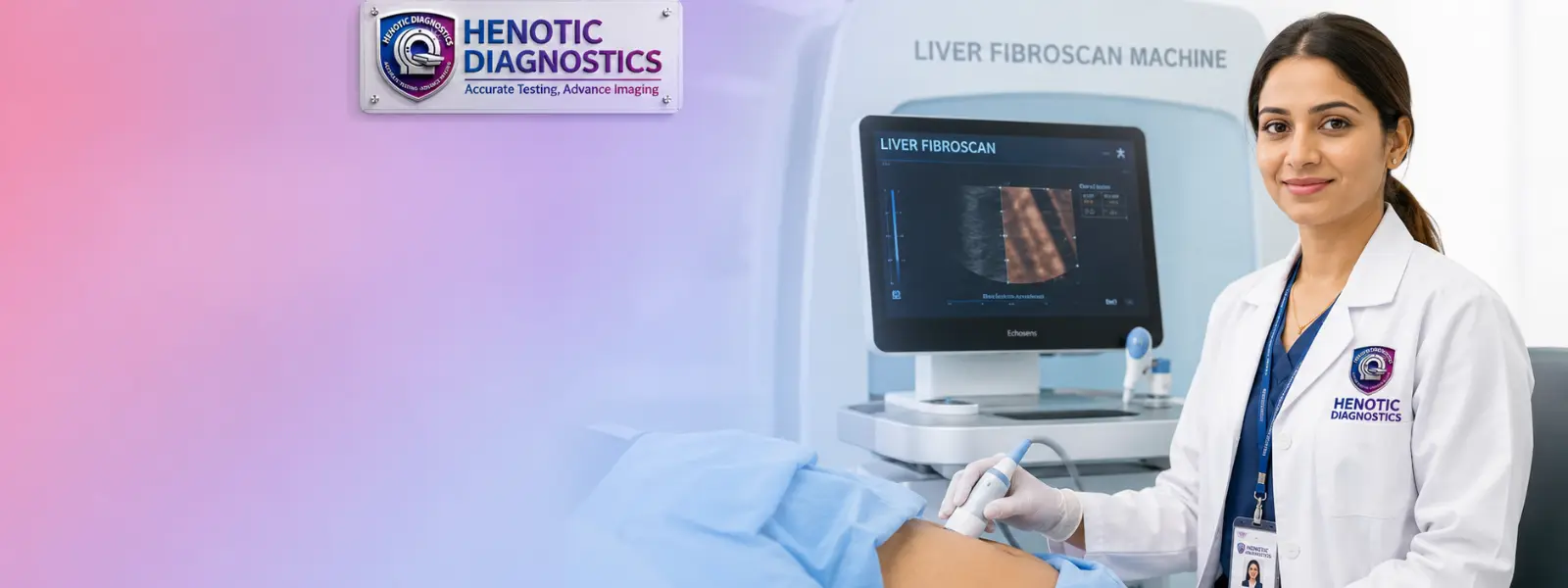
FibroScan (Transient Elastography) and liver biopsy are both used to assess liver fibrosis and disease severity, but they differ dramatically in invasiveness and patient experience. Liver biopsy has traditionally been the gold standard — a needle is inserted to extract a tissue sample for microscopic analysis. FibroScan is a revolutionary non-invasive alternative that uses ultrasound-based shear wave technology to measure liver stiffness, correlating directly with fibrosis stage.
Technology
FibroScan
Ultrasound-based transient elastography
Liver Biopsy
Percutaneous needle extraction of liver tissue
Invasiveness
FibroScan
Completely non-invasive — probe on skin
Liver Biopsy
Invasive — needle insertion under local anesthesia
Scan Duration
FibroScan
5–10 minutes
Liver Biopsy
15–30 minutes (plus recovery)
Cost Range
FibroScan
₹2,500 – ₹4,500
Liver Biopsy
₹8,000 – ₹20,000
Best For
FibroScan
Fibrosis staging, fatty liver grading, serial monitoring
Liver Biopsy
Complex liver diseases requiring histological diagnosis
Pain Level
FibroScan
Painless
Liver Biopsy
Moderate pain, requires local anesthesia
Risk of Complications
FibroScan
None
Liver Biopsy
Bleeding, infection, pneumothorax (rare but serious)
Repeatability
FibroScan
Easily repeatable for monitoring over time
Liver Biopsy
Not suitable for frequent repetition
FibroScan has largely replaced liver biopsy as the first-line assessment for liver fibrosis and fatty liver disease. It's painless, risk-free, and easily repeatable. Liver biopsy is still necessary for specific conditions requiring microscopic tissue analysis, but its use has decreased significantly.
FibroScan has >85% accuracy for diagnosing significant fibrosis and >90% for cirrhosis, making it a reliable alternative for most patients. Biopsy provides more detailed histological information but samples only a tiny portion (1/50,000th) of the liver.
Yes. Modern FibroScan devices include CAP (Controlled Attenuation Parameter), which accurately measures liver fat content (steatosis) alongside liver stiffness (fibrosis) in a single painless exam.
For monitoring chronic liver conditions, FibroScan is typically repeated every 6–12 months. For patients on treatment, more frequent monitoring may be recommended by the hepatologist.
Ultrasound vs CT Scan: Compare safety, radiation, cost & diagnostic accuracy. Understand when ultrasound is sufficient and when CT scan is required.
Color Doppler vs Ultrasound: Compare technology, blood flow visualization, clinical use & cost. Learn when a Doppler study is needed over regular ultrasound.
Our experienced radiologists and doctors can recommend the right diagnostic test based on your symptoms and clinical history.
Book a Consultation