Loading Diagnostics...
Connecting to our secure server
Connecting to our secure server


Browse our comprehensive library of diagnostic capabilities. We provide over 200 NABL accredited radiology scans and automated clinical pathology investigations.
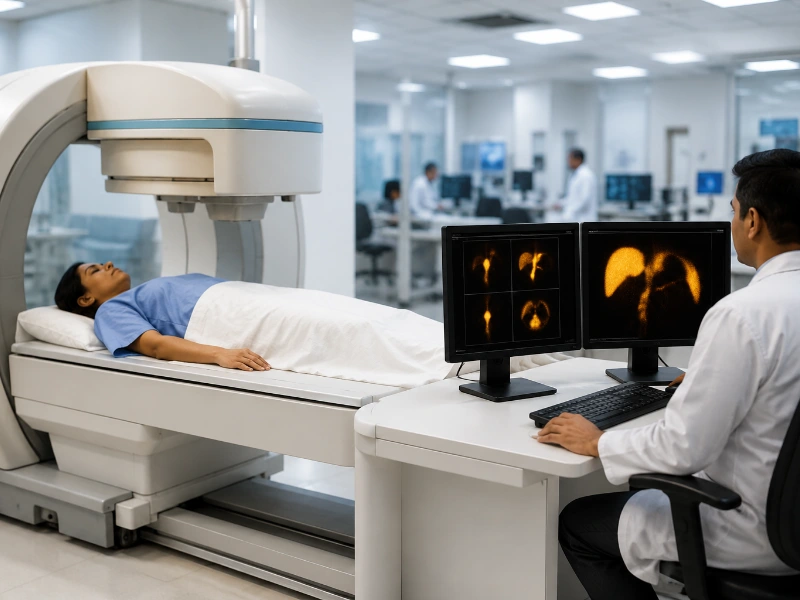
A Hepatobiliary Scan, widely known as a HIDA scan (Cholescintigraphy), is a highly specialized nuclear medicine imaging procedure designed to trace the production, transport, and ejection kinetics of bile throughout your hepatic and digestive systems. Unlike standard structural tests such as ultrasounds that only capture static snapshots of internal organs, a hepatobiliary scan evaluates the real-time dynamic behavior of your biliary pathways. Specifically, by utilizing an advanced gamma camera and a safe, target-specific radiotracer, our imaging laboratory tracks liver clearance speeds, bile duct movement, and gallbladder contractility with exceptional precision.
Furthermore, because your gallbladder and bile ducts form an intricate transport network that directly manages fat digestion, functional blockages or poor emptying speeds can lead to severe abdominal distress, chronic nausea, and localized pain. A functional problem can exist even when regular imaging shows no stones or physical growths, which makes dynamic screening necessary. Consequently, our dedicated diagnostic center employs ultra-precise gamma detection crystals and standardized software protocols to capture exact ejection fractions. As a result, gastroenterologists and hepatobiliary surgeons can quickly confirm subtle functional disorders, rule out total duct obstructions, and plan effective care pathways.
A hepatobiliary scan is a specialized diagnostic imaging profile that tracks the live functional flow of bile from the liver into the small intestine. Therefore, precise multi-phase laboratory calibration allows our nuclear medicine specialists to accurately measure extraction timelines, clear fluid paths, and evaluate individual organ emptying speeds for a comprehensive digestive health review.
To ensure complete transparency for our patients, we provide clear, upfront cost estimations across our advanced nuclear medicine imaging services. Below is the current price breakdown for hepatobiliary imaging variations and associated biochemical panel matchings at our diagnostic laboratory hubs:
| Diagnostic Scan / Panel Variation | Estimated Cost (INR) |
|---|---|
| Standard Hepatobiliary (HIDA) Scan | ₹4,500 – ₹6,000 |
| HIDA Scan with Ejection Fraction (CCK/Fatty Meal) | ₹6,500 – ₹8,000 |
| Comprehensive Hepato-Digestive Diagnostic Panel | ₹7,500 – ₹9,500 |
Note: Final pricing variations can occur based on specialized pharmaceutical requirements or specific clinical instructions provided by your referring consultant.
Physicians commonly recommend a cholescintigraphy evaluation when patients experience recurring upper abdominal discomfort that standard structural tests cannot explain, or when managing acute biliary complications. Moreover, the analytical findings directly assist gastroenterologists, abdominal surgeons, general physicians, and bariatric specialists in establishing precise medical plans. Our experienced clinical team ensures you receive highly accurate imaging and reports.
Following the injection of the tracer, our scanning cameras measure how quickly your liver cells filter the tracking agent from your blood. This step provides an excellent baseline index of underlying hepatic cell processing power.
The scanner monitors the chemical tracer as it exits the liver and travels through the hepatic and common bile ducts. This dynamic phase allows technicians to verify that the drainage passages are entirely clear and free from blockages.
We watch the tracer naturally branch off and fill your gallbladder reservoir. A failure to see the tracer enter the gallbladder during this phase points directly to an underlying blockage in the cystic duct, a classic indicator of acute inflammation.
When instructed, we administer a standardized stimulant or a specialized high-fat meal to trigger a natural contraction. Our software continuously measures the amount of fluid pushed out, providing a percentage score that helps your doctor identify chronic functional gallbladder sluggishness.
An accurate hepatobiliary scan helps clinicians identify, stage, and treat a variety of complex functional and structural digestive disorders. You can find detailed gastrointestinal guidelines from the American Gastroenterological Association clinical standards.
If your hepatobiliary scan reveals complex transport variations or emptying delays, your physician may suggest matching your imaging with other advanced diagnostic evaluations. For a detailed biochemical look at your circulating liver enzymes and bilirubin fractions, see our Liver Function Test services. For a thorough check of your systemic lipid distributions and cholesterol balances, check out our Lipid Profile test services. You can also explore our general blood test services, verify immune baselines with a Complete Blood Count (CBC) test, monitor blood sugar levels via an HbA1c test, or see how structural endocrine systems are managed via our specialized MRI Pituitary Brain services. If you need other standard blood checkups completed without traveling to the clinic, you can book a certified technician through our professional home blood collection services.
The entire imaging sequence requires approximately 90 to 120 minutes of continuous tracking to complete safely.
An abdominal ultrasound uses sound waves to check the physical structure of your organs, making it excellent for finding solid stones or visible swelling. A HIDA scan evaluates function, tracking the movement of bile over time to reveal poor emptying speeds or deep functional blocks that an ultrasound cannot see.
Yes. The tracking agent contains a very small, safe dose of radiation that is processed quickly by your liver cells. The tracer travels through your normal digestive tract and leaves your body naturally through your urine within 24 hours, meaning you simply need to drink plenty of water after the test.
A healthy gallbladder ejection fraction score is typically 35% or higher, showing your organ contracts with enough power to empty its contents normally. If your ejection fraction score falls below 35%, it point toward a functional condition known as biliary dyskinesia.
Our nuclear medicine facility reviews and processes your dynamic flow scans efficiently. The captured datasets are calculated by our specialized software, and a verified interpretation report is usually ready for your doctor within 24 hours.
Ultimately, while mild digestive upset can fade with dietary changes, chronic gallbladder strain or deep bile duct obstructions can lead to severe organ inflammation or liver changes if left unmanaged. High-precision cholescintigraphy is the only definitive way to measure your live biliary flow, remove the medical guesswork, and guide a safe recovery.
Our diagnostic center remains the premier choice for monitoring your gastrointestinal health because we combine top-tier gamma camera technology with exceptional clinical processing expertise. Furthermore, our clinical workflows eliminate tracking anomalies, our quality control protocols align with global imaging standards, and we ensure rapid delivery of your reports so you and your doctor stay fully informed. This steady focus on diagnostic accuracy makes our imaging facility a trusted partner in protecting your long-term metabolic and hepatobiliary wellness.
Get priority booking through our secure portal.
Our Price
₹5,500
Market Avg
₹10,500
You Save
48%
Save ₹5,000 compared to market average. NABL certified quality at transparent pricing.